
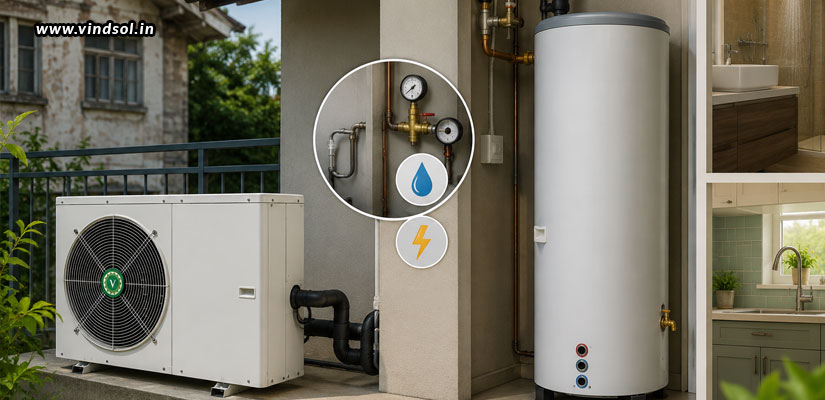
Retrofitting Old Homes With Heat Pumps
There is a significant difference between how homes were built decades ago and how they are designed today. Older homes focused mainly on basic functionality, with simple layouts, limited electrical capacity, and standalone utilities for lighting, ventilation, and water heating. Modern homes, however, emphasize comfort, efficiency, and smart integration through advanced electrical systems, optimized plumbing networks, and energy-saving technologies. One major change is the transition from traditional geysers to centralized hot water solutions that offer greater convenience and efficiency. As homeowners renovate their old homes, the domestic heat pump in India is becoming a popular choice. However, retrofitting a heat pump requires careful planning for plumbing upgrades, space allocation, electrical readiness, and installation requirements.
Space planning
Retrofitting a heat pump into an old property means adapting to the existing layout. The space availability, the best placement option, the airflow requirements – all play a vital role in making a choice.
- Placement: Where the unit is to be installed is the first concern. Domestic heat pumps require well-ventilated spaces, which is why the outdoor unit must be installed in the balcony or at the rooftop, while the tank can be placed indoors.
- Space availability: Once the placement is decided upon, it is essential to confirm that there will be adequate clearance around the unit for proper airflow, efficient operation, and easy maintenance access.
- Airflow requirements: Adequate ventilation should be ensured during installation, and the surrounding area should be free from obstructions like trees, plants, other stored objects, or walls too close to the unit.
- Load-bearing capacity: The structural strength of the platforms or rooftops where the heat pump unit is to be installed should be checked, and reinforced if required.
Plumbing upgrades
Heat pumps are designed to supply hot water across multiple outlets within the home, unlike traditional geysers that serve only a singe tap. This makes plumbing upgrades a very critical aspect when retrofitting an old home with a heat pump.
- Transitioning to a centralized system: Older homes are seen with a separate geyser dedicated to different bathrooms. But, a single heat pump requires a single centralized system to feed multiple bathrooms and kitchen outlets.
- Pipe replacement or modification: Older homes generally have narrow pipes, lack proper insulation, and may have corrosion or scaling issues. It becomes essential to upgrade to insulated high-quality piping when installing a heat pump.
- Drainage provisions: Heat pumps produce condensate water during operation, making a proper drainage connection essential to prevent water accumulation and leakage. Older homes may require additional plumbing adjustments to accommodate this.
Electrical system upgrades
Many old homes were built with electrical systems designed for lower power demands, but domestic heat pumps require safe reliable electrical setups, making it important to ensure that the current electrical system is capable of supporting the heat pump.
- Dedicated circuit with MCB protection: The heat pump should be connected to a separate circuit with a dedicated Miniature Circuit Breaker (MCB) to prevent overload, and keep both the appliance and the electrical system protected.
- Proper earthing: Effective earthing is essential to protect the equipment against electrical shocks and damage. It also ensures the safe operation of the heat pump under varying electrical conditions.
- Voltage stabilization: Frequent voltage variations can damage the compressor and control systems. It is thus safer to install a stabilizer to maintain a stable voltage and keep these sensitive components protected.
- Sufficient load capacity in the distribution board: The home’s main distribution board should have adequate capacity to handle the additional electrical load. Partial rewiring or panel upgrades may be required.
How are heat pumps ideal for renovated homes
Despite the challenges involved and lots of rework required in terms of structure, strength, space, plumbing, electrical systems, and more, domestic heat pumps are still worth installing in old homers. This is because:
- Domestic heat pumps are significantly more efficient than traditional geysers, delivering 3-5 times more energy than the electricity consumed.
- Domestic heat pumps help with heating water across multiple sources like many bathrooms together, along with the kitchen.
- Domestic heat pumps require significant lesser maintenance than traditional geysers, thus reducing the time and money invested in upkeep.
- Domestic heat pumps offer superior comfort by providing a consistent supply of hot water for multiple outlets while reducing waiting times.
- Domestic heat pumps are safer for the children and elderly, as they have no exposed heating elements, reducing the risk of burns or scalding.
- Domestic heat pumps increase the value of the property, making the home more attractive to potential buyers and easier to sell when needed.
Choosing the right system for retrofitting
Not all heat pumps are equally suited for retrofit projects. There are a number of factors that homeowners need to check before choosing their heating system. Homeowners should look for:
- Compact design: The system should have a compact footprint, allowing easy installation in balconies, utility areas, or rooftops without compromising existing usable living space or functionality.
- High efficiency (COP 3+ or higher): A system with a high Coefficient of Performance (COP 3 or above) should be chosen, ensuring maximum heat output with minimal electricity consumption.
- Low noise operation: The unit should operate quietly to maintain indoor comfort, especially in apartments, ensuring minimal disturbance to daily living spaces and preserving a peaceful home environment.
- Compatibility with existing plumbing upgrades: The system must integrate easily with current plumbing layouts, allowing smooth installation without extensive modifications.
Trusted providers like Vindsol offer reliable offering domestic heat pump in India solutions, specifically designed for Indian homes, including retrofit-friendly configurations, durable tanks, and efficient heat exchangers suited for varying water and climate conditions.
Upgrading an older home with a domestic heat pump is a wise choice for enhancing comfort, efficiency, and sustainability over the long haul. Although it necessitates thoughtful consideration of plumbing, space, and electrical systems, the advantages greatly surpass the initial work involved. Homeowners benefit from a centralized hot water system and experience notable decreases in energy use and maintenance requirements. With the right design and expert installation, even homes that are decades old can be updated to become modern, energy-efficient living environments. As more people recognize the importance of sustainable technologies, domestic heat pumps are increasingly seen as a vital improvement in renovation efforts, aligning older homes with contemporary performance and environmental benchmarks.