
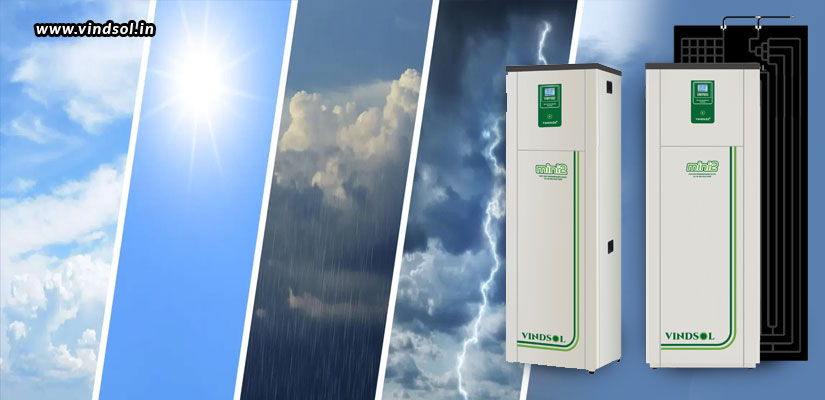
How Thermodynamic Solar Water Heaters Work In All Weather Conditions
Hot water plays a vital role in everyday life, from bathing and cleaning to cooking and sanitation. As energy costs rise and sustainability becomes increasingly important, homeowners and businesses are seeking efficient alternatives to conventional water heating methods. While traditional solar water heaters offer environmental benefits, their performance often depends heavily on direct sunlight, making them less reliable during cloudy weather, rainy seasons, or at night. Thermodynamic solar water heaters overcome this limitation by harnessing energy from both solar radiation and the surrounding environment, including ambient air and humidity. This innovative technology ensures consistent hot water production throughout the year, providing an energy-efficient and dependable solution in virtually all weather conditions.
Understanding the basics of thermodynamic solar water heating
A thermodynamic solar water heater is an advanced water heating system that combines renewable energy collection with heat pump technology to deliver reliable and energy-efficient hot water. Unlike conventional solar water heaters that rely primarily on direct sunlight, thermodynamic systems capture thermal energy from a variety of environmental sources. A specially designed thermodynamic panel absorbs heat from ambient air, solar radiation, wind, rainwater, and natural atmospheric temperature variations. This harvested energy is transferred to a refrigerant circulating within a closed-loop system. As the refrigerant absorbs heat, it undergoes a refrigeration cycle involving evaporation, compression, and heat exchange. The resulting thermal energy is used to heat water stored in an insulated tank. Because it utilizes multiple environmental energy sources, the system can continue producing hot water efficiently regardless of weather conditions or time of day.
The main components of a thermodynamic solar water heater
To understand how these systems perform in all weather conditions, it is important to first understand their key components.
- Thermodynamic panel
The thermodynamic panel acts as the primary energy collector in the system. Unlike traditional solar collectors that depend on direct sunlight, it absorbs heat from ambient air, solar radiation, humidity, wind, and rain, enabling efficient operation even during cloudy or overcast conditions.
- Refrigerant circuit
A specially formulated refrigerant circulates through the thermodynamic panel, absorbing environmental heat. Due to its low boiling point, it can extract thermal energy even at relatively low temperatures. As heat is absorbed, the refrigerant changes from a liquid into a gas.
- Compressor
The compressor plays a crucial role by increasing the pressure of the refrigerant gas. This compression significantly raises the refrigerant’s temperature, converting low-grade environmental heat into high-temperature energy that can be effectively used for water heating applications.
- Heat exchanger
The heat exchanger transfers thermal energy from the heated refrigerant to the water stored in the tank. This process efficiently warms the water while maintaining complete separation between the refrigerant circuit and the household water supply.
- Hot water storage tank
The insulated storage tank stores heated water until it is required. Advanced insulation materials help minimize heat loss, allowing the system to maintain water temperature for longer periods and ensuring a consistent supply of hot water.
- Smart control system
Modern thermodynamic water heaters incorporate intelligent control systems that monitor operating conditions and optimize performance. These controllers regulate temperatures, manage energy consumption, provide system diagnostics, and help maximize efficiency while ensuring reliable operation throughout the year.
How the heating process works
The operation of a thermodynamic solar water heater follows a continuous cycle of energy collection, refrigerant evaporation, compression, water heating, and finally refrigerant recovery. The thermodynamic panel absorbs available heat from the environment, may it be from the sunlight, air, wind, rainfall, humidity, or residual atmospheric heat. Unlike traditional solar collectors, the panel does not require direct sunshine to function. As the environmental heat enters the panel, the refrigerant absorbs this energy, and due to its low boiling point, the refrigerant quickly transforms from liquid to gas. This gaseous refrigerant then enters the compressor, where compression dramatically increases both pressure and temperature, producing high-grade thermal energy. The heated refrigerant then passes through the heat exchanger, where thermal energy transfers to the water stored in the tank, increasing its temperature. After releasing its heat, the refrigerant finally cools and returns to liquid form. This cycle then repeats continuously; the closed-loop process enabling efficient and reliable hot water production throughout the day.
How thermodynamic systems work during cloudy days
One of the biggest limitations of traditional solar water heaters is reduced performance during cloudy weather. Clouds block a significant portion of solar radiation, limiting the amount of energy conventional collectors can capture. But, thermodynamic systems overcome this challenge as they do not rely exclusively on sunlight. Even though there are clouds above, the ambient air still contains thermal energy, meaning atmospheric heat remains available. The wind continues to transfer heat across the panel surface and humidity contributes to additional thermal energy. With these sources intact, the thermodynamic panel can continue to operate effectively even during cloudy days. As a result, users can enjoy consistent hot water production even during prolonged periods of cloudy weather.
How thermodynamic systems work during rainy seasons
Rain often creates difficulties for conventional solar heating systems as sunlight levels decrease significantly. But, with thermodynamic solar water heaters, this issue is overcome too. Rainwater itself carries thermal energy. When rain comes into contact with the thermodynamic panel, there is heat transfer between the environment and the refrigerant. Moreover, atmospheric thermal energy remains available. The system thus continues extracting usable heat despite reduced sunshine. This makes thermodynamic systems particularly suitable for regions that experience long monsoon seasons or frequent rainfall.
How thermodynamic systems work during winters
Winter presents another challenge for many water heating technologies, as lower temperatures generally reduce solar collector efficiency. But, thermodynamic systems remain effective as they continue extracting available environmental heat. Even cold air contains usable thermal energy, and through compression, relatively low-temperature energy can be upgraded into high-temperature heat suitable for water heating. While heating times may increase in extremely cold conditions, the system can still provide reliable hot water production throughout the season.
How thermodynamic systems work during night
Traditional solar systems stop collecting energy once sunlight disappears. But, thermodynamic systems work differently. As they do not rely exclusively on sunlight, they can work effectively even during the night. Even after sunset, the ambient air contains thermal energy, and the ground and surrounding structures release stored heat from through the day. Also, temperature differences continue to exist within the environment. The refrigerant inside the panel can still absorb all this energy. This capability allows hot water production to continue throughout the night, ensuring convenience and reliability.
Reduced dependence on weather conditions
Traditional solar water heaters often require backup electric heaters to maintain a steady hot water supply during cold weather, rainy seasons, extended periods of cloud cover, or nighttime when sunlight is unavailable. This reliance on supplementary heating can increase energy consumption and operating costs. Thermodynamic solar water heaters, however, significantly reduce this dependency as they are designed to extract heat from multiple environmental sources, not just direct sunlight. They continue functioning efficiently during cloudy days, rainy conditions, humid weather, winter months, and even after sunset. This all-weather capability ensures a reliable and uninterrupted hot water supply, making them a practical, energy-efficient, and dependable solution for modern households and residential buildings. As a leading provider of thermodynamic solar water heater solutions in India, Vindsol offers advanced systems engineered to deliver consistent performance across varying weather conditions while helping households and businesses reduce energy consumption, lower operating costs, and move toward a more sustainable approach to water heating.
Thermodynamic solar water heaters offer a practical solution to one of the greatest limitations of traditional renewable water heating systems: reduced performance during periods of limited sunlight. Unlike conventional solar water heaters that depend primarily on direct solar radiation, thermodynamic systems continuously harvest energy from the surrounding environment, including ambient air, humidity, rainfall, and atmospheric heat. Using an advanced heat pump cycle that incorporates a thermodynamic panel, refrigerant circuit, compressor, and heat exchanger, these systems can deliver hot water in virtually all weather conditions, including cloudy days, rainy seasons, winter months, and nighttime. For homeowners and businesses, they offer a reliable, energy-efficient, cost-effective, and sustainable source of hot water throughout the year.