
Why Heat Pumps Deliver More Heat Per Unit Of Power
Energy efficiency is important in every residential and commercial space, may it be an apartment, bungalow, hotel, healthcare facility, educational institute, or a swimming pool or spa. Talking about heating technologies, there is one significant technology that consistently stands out – the heat pump, that consumes less power, while delivering more heat. At the core of this technology is the COP – Coefficient of Performance, which explains why heat pumps can deliver three to five times more heat energy than the electrical energy they consume, making them one of the most efficient heating solutions available today. The blog below breaks down this in detail, so that anyone evaluating a heating system can make an informed decision.
What does “energy efficiency” really mean in heating systems?
When considering traditional heating systems like electric heaters, gas boilers, and geysers, the operating principle is fairly simple. In most of these systems, one unit of energy produces roughly one unit of heat. But, in heat pumps, the approach to heating is different. Instead of creating heat like in the case of traditional heating systems, heat pumps simply transfer heat from one place to another. This difference is what allows heat pumps to achieve efficiency levels that traditional systems simply cannot match.
For example, when you switch on a heater, electricity flows through the heating element, making it hot, and you feel the heat coming directly from the electricity you paid for. Now, when you switch on a heat pump, electricity powers a compressor and a fan system, which extract existing heat from the air, water, or ground around, and transfer the same to where heating is required. Here, electricity is thus used as a transport mechanism, and not as a heat source. This is why heat pumps can deliver much more heat energy than the electricity they consume.
What is COP?
COP answers one simple question – “For every unit of electricity consumed, how many units of heat does the system deliver?”
For a COP of 1, a single unit of electricity gives one unit of heat; for a COP of 3, a single unit of electricity gives three units of heat; and for a COP of 5, a single unit of electricity gives five units of heat. Most modern heat pumps operate with a COP between 3 and 5, depending on the design, application, and operating conditions. This means that 70-80% of the heat output comes from free naturally available heat, and only 20-30% comes from purchased electricity.
At first glance, a COP greater than 1 might sound impossible. But, in the case of heat pumps, heat is simply transferred. Heat is already naturally available in the ambient ait, ground, and surrounding water bodies. Heat pumps simply tap into this stored energy and transfer it to where it is required. Electricity simply enables the transfer, which means you can get more energy out than you put in.
What affects the COP of a heat pump?
The COP changes based on the operating conditions, such as the temperature, design, and application.
- Source temperature: Heat pumps work best when the temperature difference between the source and output is smaller.
- System design: Well-designed systems with quality compressors, heat exchangers, and controls, deliver better efficiency.
- Installation quality: Proper sizing, insulation, and piping significantly impact real-world performance.
- Application type: Heating water to moderate temperatures typically achieves higher COP than very high-temperature demands.
Understanding these factors thus helps users set realistic expectations. For homes, a higher COP means lower electricity bills, faster hot water, and consistent indoor comfort; for commercial spaces, a higher COP means reduced operating expenses, lower peak energy loads, and stable performance under continuous demand; and for spas and swimming pools, a higher COP means large volumes of water heated efficiently, long operating hours without high energy penalties, and reliable temperature maintenance.
Why COP is more meaningful than traditional efficiency ratings
Traditional heating systems are usually rated using efficiency percentages like 80% efficient, 90% efficient, and 95% efficient. These numbers indicate how much energy is lost during the heat generation process. COP, on the other hand, measures how effectively energy is multiplied through heat transfer. For example,
COP of 3 = 300% efficiency
COP of 4 = 400% efficiency
COP of 5 = 500% efficiency
When evaluated over the full lifecycle of a heating system, higher COP leads to long-term cost savings. Since energy costs make up the largest portion of total ownership expenses, systems that deliver more heat per unit of power significantly reduce ongoing operating costs. In addition, heat pumps generally require less maintenance due to fewer high-stress components, which further lowers expenses over time. As a result, heating systems with higher COP are able to recover their initial investment faster, making them a more economical choice in the long run.
Beyond cost benefits, COP also plays a key role in sustainability. It reduces direct fuel consumption, cuts down on greenhouse gas emissions, and improves overall energy efficiency. Higher COP thus benefits not just the user, but the entire energy ecosystem.
Why should COP matter when choosing a heating system?
When comparing heating solutions, buyers often focus on capacity, initial price, and brand reputation. While these factors matter, COP reveals the true performance value of a system by showing how efficiently it converts power into usable comfort over the long term. As energy costs rise and efficiency standards tighten, systems based on direct energy conversion become increasingly expensive to operate. Heat pumps, with their high COP, offer a future-ready advantage by:
- Reducing dependence on fossil fuels
- Lowering carbon emissions
- Integrating easily with renewable energy sources
- Meeting evolving efficiency regulations more effectively
This makes COP not just a buying metric, but a long-term safeguard against rising costs and changing sustainability demands. COP is a clear explanation of why heat pumps have become the preferred heating solution across residences, commercial spaces, and recreational applications. By moving heat instead of generating it, heat pumps unlock a level of efficiency that traditional systems simply can’t achieve. COP puts this advantage into a single, understandable number – one that reflects real savings, real sustainability, and real performance.
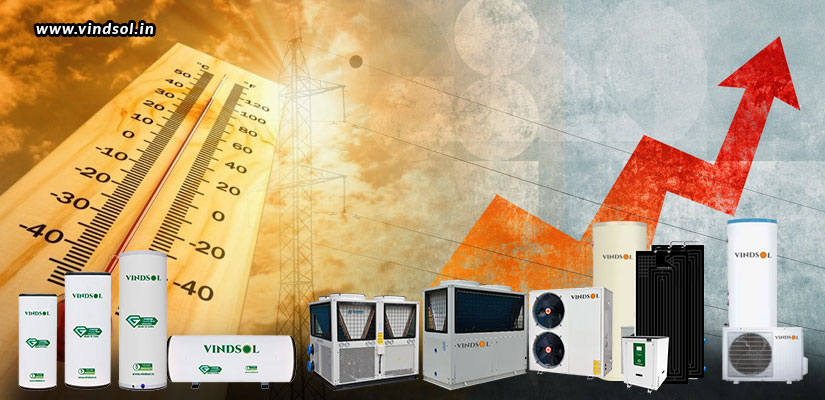
As energy efficiency becomes a necessity rather than an option, heat pumps represent a smarter, more responsible way forward. Manufacturers like Vindsol are advancing high-COP heat pump in India solutions designed for diverse climatic and application requirements. With a strong focus on energy efficiency, reliability, and sustainability, Vindsol heat pumps help residential, commercial, and recreational facilities reduce operating costs while meeting the country’s growing demand for responsible heating solutions.