
How Heat Pumps Are Powering Process Heating Applications
Heat pumps are increasingly becoming a fundamental technology in contemporary industrial heating systems. What was previously a solution confined to residential hot water and comfort in buildings is now being extensively utilized in manufacturing and production settings where accurate, continuous, and efficient heating is crucial. Industries are moving away from fossil-fuel-based boilers and traditional heating systems due to escalating energy prices, stricter emissions regulations, and the demand for improved thermal efficiency. Currently, advanced heat pump systems are effectively meeting process heating needs in sectors such as food processing, pharmaceuticals, chemicals, textiles, dairy, and hospitality. Their capability to provide controlled heat with high efficiency is revolutionizing how industries handle thermal energy today.
Heat pumps in process heating
Process heating involves utilizing heat in various industrial activities like drying, sterilization, pasteurization, evaporation, chemical processing, washing, and material treatment. These activities necessitate a stable and often continuous supply of heat, making energy efficiency and reliability essential. Earlier, industries have depended on steam boilers, oil or gas-fired heaters, and electric resistance heating systems. Although these systems have proven to be effective, they tend to also be energy-intensive and frequently experience high operational costs along with heat losses. Heat pumps present a fundamentally different solution by transferring heat instead of generating it. This characteristic makes them considerably more energy-efficient and ideal for prolonged industrial processes where the demand for heat remains steady.
Why industries are adopting heat pumps for process heating
The shift towards heat pumps in industrial heating is influenced by various practical and economic considerations.
- Increasing energy expenses
Industrial heating accounts for a significant portion of energy expenditures. Heat pumps can greatly lower energy usage by providing multiple units of heat for each unit of electricity consumed.
- Pressure for decarbonization
Industries face growing demands to cut carbon emissions. Heat pumps remove the need for direct combustion, offering a cleaner alternative to systems reliant on fossil fuels.
- Stability in processes
Numerous industrial operations necessitate accurate temperature regulation. Heat pumps deliver consistent and controllable heat output, enhancing product quality and uniformity.
- Savings in long-term operations
While the initial setup costs may be higher, the overall lifecycle operating expenses are considerably lower when compared to traditional boilers and heaters.
How heat pumps support industrial heating processes
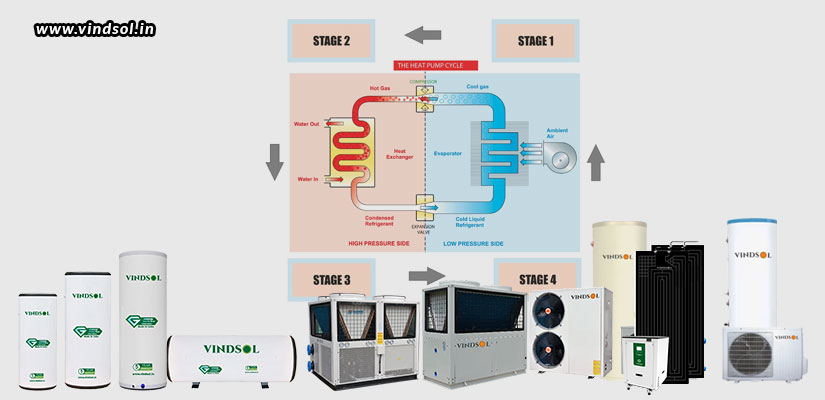
Heat pumps operate on a thermodynamic cycle that transfers heat from a lower temperature source to a higher temperature sink. In industrial applications, this enables the conversion of waste heat or ambient energy into usable process heat. The primary benefit is efficiency. Instead of converting fuel into heat, heat pumps enhance existing thermal energy, making them exceptionally efficient in environments with continuous use. Contemporary industrial heat pumps are capable of providing medium-temperature heat for tasks like washing, cleaning, and drying; and high-temperature heat for more rigorous processes. This broadened temperature capability is what renders them suitable for genuine industrial applications today.
Role of heat pumps in continuous production environments
Industries operating continuous production cycles require heating systems that deliver uninterrupted, stable performance under varying load conditions. Heat pumps are particularly suitable for such environments because they provide consistent thermal output with high operational reliability. Unlike combustion-based systems, which may experience efficiency fluctuations due to fuel variation or maintenance downtime, heat pumps maintain steady performance over long operating hours. This makes them ideal for sectors such as food processing plants, chemical manufacturing units, pharmaceuticals, and large-scale dairy operations where temperature consistency directly impacts product quality. Additionally, modern heat pumps are designed for automated operation, reducing manual intervention and ensuring seamless thermal management. Their ability to maintain efficiency during continuous operation makes them a dependable solution for industries with round-the-clock heating demands.
Integration with existing industrial heating systems
Heat pumps are increasingly being integrated into existing industrial heating systems rather than replacing them entirely. Many facilities adopt a phased approach where heat pumps work alongside boilers, waste heat recovery units, or thermal storage systems. This hybrid configuration allows industries to improve energy efficiency without disrupting ongoing production processes. In such setups, heat pumps typically handle base-load heating requirements, while conventional systems manage peak demand or backup heating needs. This reduces fuel consumption and improves overall system stability. Integration also enables better energy optimization, as heat pumps can utilize low-grade heat sources already available within the plant. As a result, industries benefit from reduced operational costs, improved system flexibility, and smoother transition toward low-carbon heating solutions without requiring complete infrastructure replacement. Vindsol is one of the trusted heat pump manufacturers offering industrial-grade systems designed for efficient and reliable process heating applications across industries. Their solutions ensure high energy efficiency, stable performance, and seamless integration into existing industrial heating setups.
Types of heat pumps used in process heating
Different industrial applications require specific heat pump configurations based on heat source availability, temperature requirements, efficiency expectations, and operational conditions.
- Air-source heat pumps
Use ambient air as heat source, suitable for moderate temperatures and smaller industrial setups requiring flexible and cost-effective solutions.
- Water-source heat pumps
Extract heat from groundwater or process water, offering higher efficiency due to stable thermal conditions and consistent year-round performance.
- Ground-source heat pumps
Utilize geothermal energy for highly stable, long-term industrial heating applications with excellent efficiency and minimal seasonal temperature variation impact.
- High-temperature industrial heat pumps
Designed specifically for process heating, delivering elevated temperatures suitable for demanding industrial production lines requiring continuous, reliable thermal output.
Key process heating applications of heat pumps
Heat pumps are now being deployed across a wide range of industries:
- Food and beverage industry – Pasteurization, cleaning-in-place (CIP) systems, drying and cooking processes, and hot water generation
- Pharmaceutical industry – Sterilization systems, controlled heating for chemical formulation, and cleanroom temperature-controlled processes
- Textile industry – Fabric drying, dyeing and finishing processes, and heat recovery from wastewater systems
- Chemical industry – Reactor temperature control, distillation and evaporation support, and process water heating
- Dairy industry – Milk pasteurization, cleaning systems, and boiler replacement for hot water supply
Heat pumps are no longer limited to residential or comfort applications; they are now a critical enabler of industrial process heating systems. Their ability to deliver efficient, controllable, and sustainable heat makes them a strong alternative to traditional fossil-fuel-based heating technologies. As industries move toward higher efficiency standards, heat pumps are increasingly being integrated into diverse production environments where consistent thermal performance is essential. With rising energy costs and stricter environmental regulations, industries are prioritizing solutions that reduce operational expenses and carbon emissions. Heat pumps provide a practical pathway toward energy optimization and decarbonization, marking a clear shift toward more sustainable industrial heating systems.