
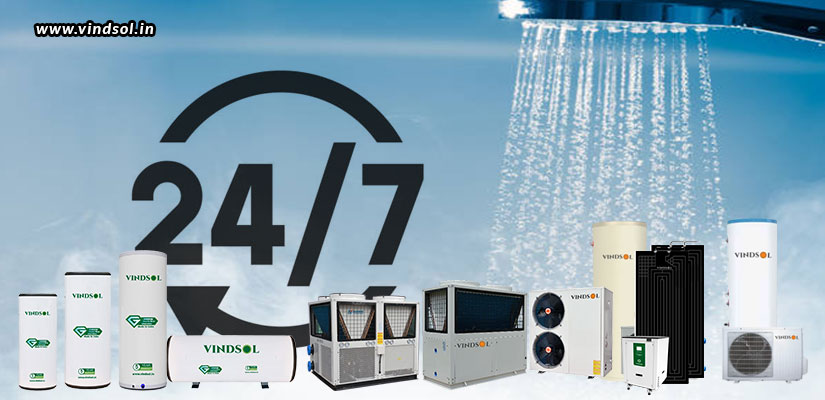
How Heat Pumps Support 24×7 Hot Water Supply
In many environments, hot water is a continuous operational necessity rather than a luxury. From residential buildings to hotels, hospitals, and commercial facilities, demand often extends around the clock. Traditional systems like electric heaters and fuel-based boilers are typically designed for intermittent use, making them less efficient and costly under constant or variable demand. Heat pumps offer a more advanced solution by transferring heat instead of generating it directly. This approach significantly reduces energy consumption while ensuring a steady hot water supply. Their ability to operate efficiently for extended periods makes heat pump in India an ideal choice for applications requiring reliable, 24×7 performance.
Understanding continuous hot water demand
The demand for hot water can differ significantly based on the application, yet in numerous instances, the usage is not uniformly spread across the day. Typical demand patterns consist of:
- Morning and evening surges in residential buildings
- Ongoing usage in hotels and hospitality settings
- Hygiene-driven requirements in healthcare facilities
- Intense consumption cycles in spas, wellness centres, and recreational areas
In these settings, the system must not only provide hot water, but also recover swiftly and sustain stable temperature levels despite varying demand. This is where traditional systems frequently underperform.
Why traditional systems struggle with 24×7 demand
Traditional water heating systems rely on direct energy conversion – either through electricity or fuel. While effective for smaller or intermittent needs, they face several limitations in continuous-use environments. Key challenges include:
- High energy consumption: Continuous operation leads to significant energy usage, increasing operating costs over time.
- Slow recovery rates: Once stored hot water is depleted, reheating can take time, leading to supply gaps.
- Temperature fluctuations: Maintaining consistent output becomes difficult during peak demand periods.
- Increased wear and tear: Constant operation places stress on components, leading to higher maintenance requirements.
These limitations make traditional systems less suitable for applications where hot water demand is both high and continuous.
How heat pumps enable 24×7 hot water supply
Heat pumps use efficient heat transfer to deliver consistent, energy-saving performance. They maintain high efficiency during continuous operation, adapt to varying demand, reduce energy consumption, and integrate with storage systems, making heat pump in India a reliable and cost-effective solution.
- Integration with thermal storage systems
One of the most efficient methods by which heat pumps meet continuous hot water requirements is through their integration with thermal storage systems. Thermal storage helps with stored heated water during times of low demand, always making hot water available. This provides instant hot water during peak usage times too. It also distributes load evenly throughout the day, and minimizes the need for oversized equipment to store hot water for longer. This synergy enables the heat pump to function effectively while guaranteeing that hot water is consistently accessible when required.
- Consistent temperature control for user comfort
In settings like hotels, hospitals, and spas, maintaining a consistent temperature is as crucial as ensuring availability. Heat pumps come with advanced control systems that sustain accurate output temperatures, modify performance according to demand, and avoid overheating or underheating; thus guaranteeing user comfort at various usage points. Such degree of control is vital in environments where user experience and hygiene standards are directly related to water temperature. In high-demand settings, storage is not merely an accessory; it is an essential component of system design.
- Energy efficiency in continuous operation
One of the key benefits of heat pumps is their capacity to provide more heat for each unit of electricity used. In applications that run continuously, this efficiency is even more crucial. Advantages include lower energy costs over time, less pressure on electrical systems, and better sustainability outcomes. Even minor enhancements in efficiency can result in significant savings when systems are in constant operation.
- Scalability for growing demand
In various commercial and institutional environments, the demand for hot water tends to rise over time due to facility expansions, increased occupancy levels, and greater usage intensity. Heat pump systems can be tailored to adapt to this demand through modular setups, increased storage capacity, and system integration. This adaptability guarantees that the system remains efficient as needs change.
Application-specific benefits
heat pumps deliver benefits across industries by ensuring reliable, energy-efficient hot water supply. Their ability to handle varying demand levels and operate continuously makes them an ideal solution for residential, commercial, and high-demand applications.
- Residential buildings
In modern homes and apartment complexes, hot water demand often peaks during specific hours but may also extend throughout the day. Heat pumps provide reliable supply during peak times and reduced dependency on backup systems, thus enabling lower electricity bills.
- Hospitality industry
Hotels and resorts require a continuous supply of hot water for guest rooms, kitchens, laundry services, and swimming pools and spas. Heat pumps help maintain uninterrupted service, while reducing operational costs – an important aspect in improving overall profitability.
- Healthcare facilities
Hospitals and clinics depend on hot water for sterilization processes, cleaning and sanitation, and patient care. Here, reliability is critical. Heat pumps offer stable, continuous performance with lower risk of system failure during high-demand periods.
- Spas and recreational facilities
Facilities like spas, wellness centres, and swimming pools require large volumes of heated water, often at consistent temperatures. Heat pumps are ideal for maintaining pool temperatures, supporting spa operations, and handling high consumption cycles efficiently. Their ability to run continuously without excessive energy use makes them a preferred choice in these environments.
The importance of correct system planning
Continuous hot water supply depends not only on the equipment but also on how well the overall system is designed. Key considerations include proper capacity sizing, adequate storage integration, efficient piping layout, smart control systems, and redundancy planning for critical applications. These elements ensure that the system can handle varying demand without performance gaps. To fully benefit from heat pump technology, careful system planning is essential. This involves accurate demand assessment, climate considerations, thoughtful storage design, and high-quality installation. Vindsol stands out as a trusted provider of heat pump in India, offering expertly engineered solutions tailored to diverse applications. With a strong focus on system design, efficiency, and long-term reliability, Vindsol ensures optimal performance and seamless integration for continuous hot water requirements. These heat pumps deliver consistent, energy-efficient performance and reliably meet 24/7 hot water requirements with minimal downtime.
Ensuring a constant supply of hot water is a multifaceted challenge that demands more than just robust equipment; it necessitates an efficient and thoughtfully designed system that can adapt to fluctuating demand. Heat pumps address this challenge by merging energy efficiency, operational reliability, and smart system integration. Their capacity to provide consistent performance while reducing energy usage makes them an excellent choice for residential, hospitality, healthcare, and recreational settings. Moreover, their scalability and compatibility with modern infrastructure make them future-ready solutions for evolving hot water demands. As the demand for dependable and sustainable heating solutions rises, heat pumps emerge as a technology that can effectively support ongoing hot water needs – efficiently, reliably, and economically.