
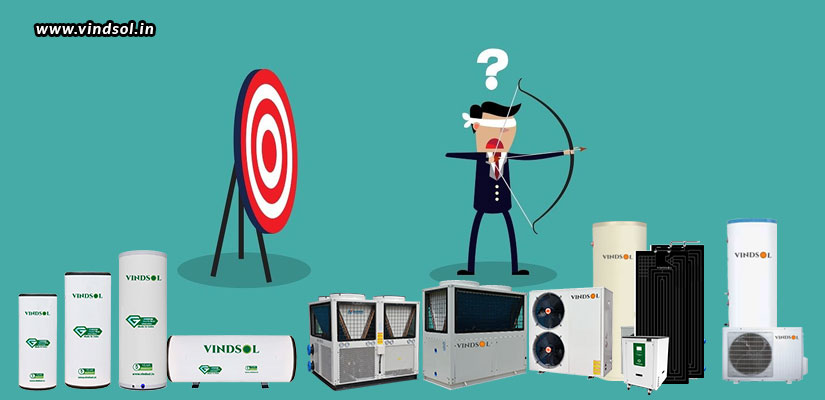
Common Heat Pump Buying Mistakes
Heat pumps have emerged as one of the most efficient and widely embraced solutions for contemporary heating needs in residential, commercial, hospitality, and industrial sectors. Their capacity to provide high energy efficiency, support sustainability objectives, and ensure dependable performance has established them as a favoured choice over traditional heating systems. Nevertheless, in spite of their benefits, numerous buyers still commit avoidable errors during the selection and planning stages. These errors frequently result in subpar performance, increased operating expenses, and dissatisfaction with the system. This guide delves into the such heat pump purchasing mistakes and offers insights on how to avoid them, thereby guaranteeing long-term efficiency, reliability, and value.
Mistake 1: Focusing only on the initial cost instead of lifecycle value
One of the most common mistakes buyers make is prioritizing the initial cost of the system, rather than considering the long-term operating costs. The initial cost is certainly a factor to consider, but it does not reflect the true cost of ownership.
- Why this is a problem
If you consider purchasing a system only because it is cheaper than its other alternatives, it may result in consuming more energy over time, and delivering lower efficiency. It may also require more frequent maintenance and have a shorter operational lifespan. The value of a system is best measured through lifecycle performance, rather than the purchase price alone.
- What to do instead
Instead of focusing solely on the purchase price, buyers must evaluate the energy consumption over time, the expected operating efficiency, the system durability, and the maintenance requirements of the system. A slightly higher initial investment often results in significantly lower long-term costs.
Mistake 2: Incorrect capacity sizing
Sizing is one of the most critical factors in heat pump performance, as it determines how well the system matches the heating or cooling demand of a space. It involves selecting the appropriate capacity based on usage requirements and operating conditions.
- Why this is a problem
Undersizing can lead to continuous operation at maximum load, resulting in higher energy consumption. Also, there will be a slower heating response, which means reduced comfort levels. Oversizing, on the other hand, can lead to inefficient energy usage, frequency cycling on and off, unstable temperature control, and higher wear and tear.
- What to do instead
Buyers must ensure correct capacity sizing of the system in relation to the space it needs to heat up. The sizing decision should be based on the actual heat demand, the climate conditions, the space size, the usage patterns, and peak versus average load requirements. An appropriate size ensures stable and efficient performance across all operating conditions.
Mistake 3: Overlooking the climatic conditions
While heat pumps can perform across a wide range of climates, the predominant climate conditions of the installation location should be considered during selection. This helps ensure that the system is appropriately matched to the environment and operates as intended.
- Why this is a problem
Heat pumps rely on heat transfer from the environment. Variations in ambient temperature can influence heating speed, efficiency levels, and energy consumption. In different climatic conditions, the availability of heat in the surrounding air or water changes, which affects how the system operates and adjusts its output to meet demand requirements.
- What to do instead
Buyers must evaluate the seasonal temperature variations, extreme weather conditions, and humidity levels, while also checking on how the climate of the location stays through most of the year. The installation environment, and whether the system is to be installed indoors or outdoors should also be checked.
Mistake 4: Ignoring application-specific requirements
Not all heat pump applications are the same. A system designed for a residential home may not be suitable for a hotel, hospital, or spa. Each application has different usage patterns, demand levels, and operational requirements that must be considered during selection.
- Why this is a problem
Buyers often select systems without considering the heat demand, storage requirements, temperature consistency needs, and usage patterns. This results in improper system selection, leading to mismatched performance, inefficient operation, and difficulty in meeting actual heating requirements in real-world conditions.
- What to do instead
The system should be chosen based on where it needs to be installed, and the application it needs to serve. For instance, when it is to be installed for a residential space, the focus should be on comfort, efficiency, and quiet operation. Similarly, when looking to serve a hospitality industry, the system should enable continuous supply and fast recovery. The healthcare industry demands high reliability, while recreational spaces demand stable temperature and high-volume output. Such system-application matching ensures better performance and user satisfaction.
Mistake 5: Ignoring maintenance requirements
While heat pumps are generally low-maintenance compared to traditional systems, they are not maintenance-free. Regular attention to basic components, periodic inspections, and timely servicing are still required to ensure consistent operation and proper functioning over the system’s overall lifecycle.
- Why this is a problem
Airflow blockages, contaminated filters, and other similar faults within the system, if not addressed in time, can lead to reduced efficiency, higher operating costs, and a shorter equipment lifespan. Regular inspection and basic upkeep help maintain smooth airflow and ensure the system continues to operate under normal working conditions.
- What to do instead
Buyers must establish a basic preventive maintenance schedule that includes regular inspections, cleaning of critical components, system performance checks, and professional servicing at intervals. Such preventive care ensures long-term reliability and efficiency of the system.
Mistake 6: Underestimating the importance of system design
Even the best heat pump will underperform if the system design is poor. System design includes factors such as capacity planning, layout configuration, installation approach, and integration with other components, all of which influence how the system operates in real conditions.
- Why this is a problem
A poor system design can result in uneven heating, reduced system efficiency, energy losses, and increased maintenance issues. It may also affect system stability and overall performance, making it difficult for the heat pump to operate as intended under real usage conditions and varying demand throughout the system lifecycle.
- What to do instead
System design should be treated as a core part of the project. Buyers should check some key designing features like the piping layout, storage integration, heat distribution, control system configuration, and backup or redundancy planning. Proper planning ensures the heat pump operates at its intended efficiency.
Mistake 7: Choosing equipment without professional assessment
Many buying decisions are made without proper technical evaluation, often based on assumptions or incomplete information. A heat pump system’s quality depends not only on the equipment but also on the knowledge, experience, and support provided by the manufacturer and installers.
- Why this is a problem
When purchasing decisions are made without professional support, it can result in poor system selection, incorrect sizing, inefficient performance, and higher costs. Lack of technical evaluation may also lead to mismatched application requirements and reduced system reliability, affecting overall performance and making it difficult to achieve expected operational outcomes.
- What to do instead
Buyers should look for professional assistance when investing in a system. Professionals will help with site evaluation, load calculation, usage pattern analysis, and system design. Also, buying from reliable manufacturers ensures better engineering design, stronger quality control, and a longer system life. Expert involvement ensures the system is correctly matched to real-world requirements.
How to make a smart heat pump buying decision
When planning to invest in a heat pump, buyers should follow a structured decision-making approach that considers both technical and operational factors. It is essential to focus on lifecycle cost rather than just the purchase price, ensure correct system sizing based on real data, and match system design to specific application needs. It is also important to consider climate and operating conditions, prioritize professional evaluation and installation, and include maintenance planning from the beginning. A well-planned system delivers higher efficiency, better comfort, and significantly lower long-term costs. For example, established heat pump companies like Vindsol focus on delivering systems designed for real-world performance across diverse applications, helping users avoid common installation and operational challenges.
Heat pumps are exceptionally efficient and dependable systems; however, their effectiveness is significantly influenced by the selection, design, and implementation processes. Most purchasing errors arise not from the technology itself, but rather from insufficient planning, a lack of technical knowledge, or overly simplistic decision-making. By concentrating on practical usage, appropriate system design, and long-term operational efficiency, purchasers can maximize the advantages of heat pump technology. When handled properly, heat pumps provide not only energy savings but also consistent comfort, reliability, and sustainability, establishing them as one of the most efficient heating solutions for contemporary applications.