
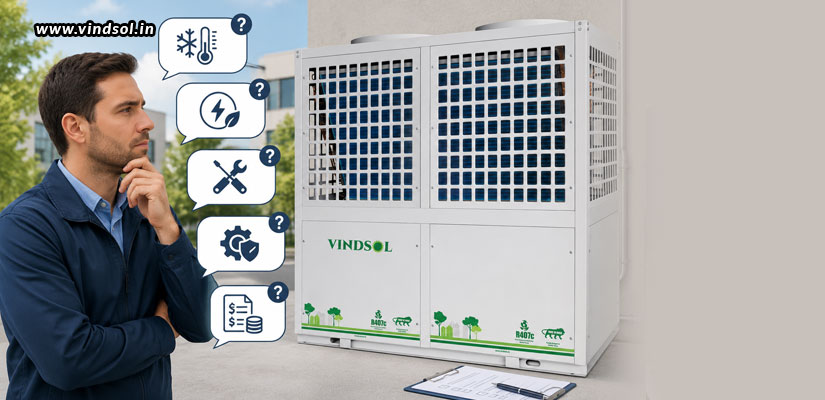
Top 5 Questions Every Commercial Heat Pump Buyer Should Ask
Investing in a commercial heat pump in India represents a long-term commitment that affects energy expenses, indoor comfort, operational efficiency, and sustainability objectives. Selecting the appropriate system can lower costs and enhance performance, whereas an unsuitable choice may result in elevated maintenance expenses and erratic operation. Given the wide array of commercial heat pump options available, businesses should consider more than just initial pricing and assess aspects such as energy efficiency, warranties, maintenance needs, installation compatibility, and brand trustworthiness. By asking the right questions prior to making a purchase, commercial buyers can make well-informed decisions that are prepared for the future, promoting long-term savings, dependable performance, and overall business effectiveness.
- How energy efficient is the heat pump?
Energy efficiency must be a primary factor when assessing a commercial heat pump. Given that commercial buildings utilize substantial energy year-round, even minor enhancements in HVAC efficiency can lead to significant cost reductions over time. Heat pumps excel in transferring heat rather than producing it directly, which makes them far more efficient compared to conventional heating systems. Nevertheless, efficiency levels can differ greatly among various models and manufacturers. Commercial purchasers should closely examine efficiency ratings such as:
- Seasonal Energy Efficiency Ratio (SEER)
- Heating Seasonal Performance Factor (HSPF)
- Coefficient of Performance (COP)
These ratings offer valuable insights into the operational efficiency of a system during both cooling and heating phases. Generally, a higher rating signifies reduced energy usage and enhanced operational efficiency.
- Is the heat pump properly sized for the building?
One of the most common mistakes in commercial HVAC installations is the incorrect sizing of systems. Larger does not always equate to better, and systems that are too small can pose significant issues as well. A heat pump that is undersized will have difficulty maintaining indoor comfort, resulting in continuous operation, higher energy consumption, and accelerated wear. Conversely, an oversized system may cycle on and off excessively, diminishing efficiency and creating inconsistent temperatures throughout the premises. Commercial buyers should ensure that a comprehensive load calculation is conducted prior to system selection. This calculation considers various factors such as:
- Building size and layout
- Occupancy levels
- Insulation quality
- Window placement
- Climate conditions
- Equipment heat generation
- Ventilation requirements
Different commercial environments have unique heating and cooling needs. Hotels, offices, retail outlets, restaurants, and industrial facilities each necessitate customized HVAC solutions. Selecting the appropriately sized heat pump guarantees balanced performance, enhanced comfort, and optimal operational efficiency.
- What warranty coverage and after-sales support are available?
Many buyers focus primarily on the initial purchase price, but often neglect long-term protection. A robust warranty signifies the manufacturer’s assurance in the system’s reliability and durability. It also offers financial protection against unforeseen failures or defects in components. Prior to making a purchase, businesses should inquire:
- What components are included in the warranty?
- What is the duration of the warranty?
- Are compressors, coils, and electrical components part of the coverage?
- Does the warranty encompass labour or solely replacement parts?
- What circumstances could invalidate the warranty?
Equally crucial is the quality of after-sales support. Even the most sophisticated heat pump systems may necessitate technical assistance, inspections, or repairs throughout their operational lifespan. Insufficient support can result in prolonged downtime, potentially disrupting operations in hotels, offices, retail environments, healthcare facilities, and industrial settings. Dependable service support guarantees quicker resolution of issues and uninterrupted comfort for both employees and customers.
- What are the long-term maintenance requirements?
Commercial heat pumps are engineered for continuous operation, frequently functioning for long hours each day. Over time, wear and tear can affect performance, particularly if maintenance is overlooked. Before committing to a system, buyers should have a clear understanding of the associated maintenance requirements. Routine maintenance generally includes:
- Cleaning or replacing filters
- Inspecting coils and refrigerant levels
- Checking electrical components
- Monitoring airflow and calibrating thermostats
- Cleaning drainage systems
Regular maintenance aids in maintaining efficiency, prolonging equipment lifespan, and minimizing the risk of unexpected breakdowns. Businesses should also inquire whether the supplier provides preventive maintenance programs or service contracts. A well-maintained commercial heat pump can often function efficiently for 15–25 years, making maintenance planning an essential aspect of the purchasing process.
- How reliable is the manufacturer?
Brand reputation significantly affects the long-term success of any investment in commercial heat pumps. A reputable manufacturer is more likely to provide reliable products, consistent performance, and robust technical support. Prior to making a purchase, buyers should investigate the company’s experience in the industry, the quality of its products, and its reputation among customers. Reading reviews, case studies, and testimonials can offer valuable insights into actual performance. Important questions to consider include:
- How long has the company been in business?
- Does the brand focus on commercial heat pumps?
- Are spare parts readily available?
- Does the company offer installation and technical assistance?
- What industries has the supplier served?
Reliability is crucial in commercial settings where HVAC failures can directly affect business operations, employee productivity, and customer satisfaction. A dependable supplier serves as a long-term partner rather than just a vendor of products.
The role of professional guidance
Choosing the right commercial heat pump requires careful consideration of technical, financial, and operational factors. Partnering with knowledgeable HVAC consultants or suppliers can streamline the process and minimize the risk of expensive errors. Professional advice helps businesses in:
- Accurately assessing building needs
- Effectively comparing system alternatives
- Understanding efficiency ratings
- Properly planning installation
- Developing maintenance strategies
Expert recommendations ensure that the selected system meets both immediate operational requirements and long-term business goals. For businesses in India, providers like Vindsol deliver commercial heat pump in India solutions that are designed for efficiency, durability, and sustained performance. Along with high-quality equipment, they also provide support in system selection, maintenance planning, and operational optimization.
Commercial heat pumps are increasingly recognized as more than just heating and cooling devices. They represent strategic investments that impact energy efficiency, sustainability, employee comfort, customer satisfaction, and operational expenses. By asking the right questions prior to purchase, businesses can steer clear of common mistakes and choose systems that provide long-lasting reliability and value. From grasping energy efficiency and warranty details to assessing maintenance needs, sizing precision, and supplier dependability, each element is crucial to overall performance. Companies that engage in the purchasing process with care are more likely to realize reduced operating costs, enhanced indoor comfort, and greater long-term returns on investment. Choosing the right commercial heat pump is not just about purchasing equipment; it is about fostering a smarter, more efficient future for your organization.